Monday, January 10, 2011

50. EA finally de-claws tiger

tiger '12 ps3 cover, as displayed on amazon
post number 50!  took me a while to get here, slowly but surely, and i thank everyone who reads this.  i honestly didn't think this little experiment of mine would last for more than a couple of months, but i'll be hitting the 1 year mark next month.  so as long as you keep reading, i'll keep writing.  and to the 2,200+ individual visitors from 70 countries, thank you.

now on to business.

tiger.  ohhh tiger.  the EA-tiger relationship is a constant source for material for me since i enjoy playing their golf games.  even more so since i picked up a set of clubs a couple of years ago.  remember those posts i did on that very relationship after his off-course mishaps?  sure you do.  the first one was regarding tiger woods pga tour '11, and sharing the cover with rory mcilroy for the US vs. europe ryder cup feature.  next was thinly veiled threats from EA, who basically said that tiger would be done if he didn't start performing better on the course (of course i'm paraphrasing here, they only talked about the connection between the best golf game and the best golfer but come on we all know what's up).  now it can be argued that EA has taken it a step further with tiger woods pga tour '12.  instead of the ryder cup, this one focuses on the masters, which is kind of a big deal since this tournament has never been featured in a golf video game since the dawn of golf video games.  but tiger isn't front and center here.  but now look at the cover - the sole focus is on the yellow flags of augusta and the masters logo, with "tiger woods pga tour '12" almost serving as a subtitle.

so my predictions were kind of right.  but also a lot of wrong.  is tiger off the new cover?  ehh, mostly.  but i also thought that tiger '11 would still sell fairly well, seeing as the margin between '09 and '10 was fairly slim.  well, sales for tiger '11 were down by roughly 50% since tiger '09 (reuters).  and these sales figures could have directly related to tiger's performance.  according to jesse divnih, VP of electronic entertainment design and research, "the sales issues of the tiger woods video game are much broader and deeper than tiger's personal problems and has more to do with the entire golf sport struggling in 2010." he continues, "of course, one could argue the decline in the interest of golf has to do with tiger's extended absence and returned poor performance. but even if that was true, it says a lot about the PGA Tour and their over-reliance on one person to carry the whole league. PGA exposed itself to this risk and now is facing the consequences."  he's still going to be a featured player in the game, as well as a member of team USA in the ryder cup feature, along with other big shots like bubba watson and zach johnson.

screenshot of augusta, from kotaku
which is pretty much true.  so now i feel bad for the man - in addition to his off-course problems he unofficially has the sole responsibility of carrying the PGA on his back - which i'm sure gets kind of heavy, EA is still sending mixed signals.  after a couple months have passed since the "best golf game, best golfer" statement, EA sports' president peter moore now says "if the insinuation is it's a reflection of EA sports backing away from its relationship that goes back literally 13 years with tiger, that's not the case whatsoever."

which i would wholeheartedly believe - if the ONLY cover that featured tiger prominently wasn't the playstation 3's collector's edition.

that aside i'm still looking forward to the game.  HD screens of augusta look awesome from what i've seen, there's a new feature to play with a caddy advising you, the ability to play through past masters tournament moments, and the playstation move sensitivity in 3D space is touted to be better than it was in tiger '11. jim nantz and david feherty will be the voice behind the game on commentary this year, and according to a short development story on kotaku, this is meant to be the most tour-authentic experience provided to the players of the franchise.

of course "authentic" includes what i'm sure will be many slices from my move controller in my living room, as they would invariably occur with a 3 wood were i at augusta.

Thursday, January 6, 2011

49. final fantasy's new year's resolution

naoki yoshida, from his new year's note
old squaresoft were my people.  my people.  the original final fantasy was the first game my parents ever bought me for my NES after the super mario bros./duck hunt double cartridge and we've been homies ever since.  they made a slew of other games for older systems that are fun enough to occasionally hook them up and play again.  chrono trigger and breath of fire are a couple of examples - but final fantasy topped them all.  after the first one came FF IV and VI for the SNES (II and III in the US) and those kept up that same level of quality and fun.  then came the playstation era, which added a higher graphical component and deeper gameplay.  not to mention it gave us the greatness that was final fantasy VII.  and then of course FF X for the PS2 - ambitious in depth, a "just out there enough" story, and featuring the power of the PS2.

then it died.

out of the first 10 final fantasy games, including the re-releases, i consider at least 5 of them to be "great" games. these games had good combat systems, deep and twisting storylines, and offered hours upon hours of gameplay.  and they all had one thing in common:  they had me hooked in the first 15 minutes of play.  but then square merged with enix, and somewhere around then the franchise went into decline.  i'm not saying that it happened BECAUSE of the merger, but the timing does seem relevant.  X-2, the first direct sequel to any FF game, was ok, but just didn't have that same level of depth.  the idea of final fantasy online didn't appeal to me so XI was out.  and i couldn't play XII for more than 30 minutes without getting irritated at pretty much everything.  and finally, the for first current-generation offering of final fantasy XIII, the graphics are incredible, the story's alright, the faster battle system is kind of fun (though a little dumbed down), but the game is almost completely linear.  it felt like it completely lost the open-world, visit towns, explore rooms, talk to NPC's tradition that was a big part of the franchise since its origin.  but it is visually gorgeous.  i will give it that for sure.  click the screenshot below and to the right for a full screenshot.

now square-enix makes another foray into the online realm with their latest installment, final fantasy XIV.  they released it just this past fall, to the near-universal panning from both game critics and fans alike.  convoluted gameplay.  terrible interface.  horrible economy system.  unbelievably boring grinds compared to other MMO's.  bad enough for the CEO to apologize to the fans in december and extend their trial period indefinitely, because they even feel bad taking money for this kind of horror.  and also bad enough that in october, a major square-enix stockholder (not like a majority holder, but 1%, which is a pretty sizable chunk) instructed his broker to sell every share he had.  "first thing in the morning tomorrow, i intend to instruct those who manage my precious square enix stock (however little it may be) to arrange to sell all of it," he said.  "to square, thank you for the enjoyment of your products up until now, with the exception of this last one. goodbye" [gamesradar].  pretty heavy.  heavy enough to ding square-enix's stock value by 4% by himself.

screenshot, from finalfantasyxiv.com
i understand that a final fantasy MMO is meant to stand on its own, and their goal is to make it unique to other games on the market.  but isn't anyone on the dev team play any other MMO's?  any guild wars fans?  any of them check out competitors like world of warcraft to see how user interfaces and other features are done properly?  blizzard's stranglehold on the MMO market won't soon be broken, and whether to appease fans or use us only as streams of steady revenue, they know what they're doing, and keep their players.  we're talking 12 million subscribers strong by the time final fantasy XIV was even released, so maybe some mild emulation might have been called for.

so after a major staff restructuring, new producer/director naoki yoshida has made it his new year's resolution to make this right with the fans - using four key words in his plan: "fun," "live," "reboot," and "rebuild." and he'll need all of these, in fast order, to bring back fans that they've miffed with this sub-square offering.  while most of this flak is coming from the poor, almost unfinished quality of the game, another part of it is coming from who's producing it.  it's beneath square, a studio that's shaped how RPG's go in the last quarter century.  in the note (check the provided link above) yoshida is extremely optimistic, saying that the "last few weeks of 2010 were tumultuous times for us all" but stressing that these are new times and they are moving in new directions.  which is promising in theory, because the only direction they have left is up.

just so you can get a better idea, here are a couple of links to some "professional" reviews of final fantasy xiv from 1up and gamesradar.
1up
gamesradar

Tuesday, December 28, 2010

48. decade of the anti-hero

kratos in god of war III (godofwar.com)
so 2010's drawing to a close, and of course most sites are publishing their obligatory "best of" lists.  so i thought we'd do something a little more year-end themed here.  well in this case, decade-end themed.  i know a bunch of you will probably either publicly or privately flame me for what the definition of the end of a decade is, which was actually the end of 2009.  but hey, if gameFAQs can do their "game of the decade" stuff at the end of 2010, then damn it, i can do something too.

we saw a lot of change in the last 10 years of gaming, first and foremost in technology.  in 2000 we were busting 900's in tony hawk's pro skater on the first playstation and reveling in the graphical delights of soul calibur on the dreamcast.  then came a wave of technology - a couple of years after this saw the death of the dreamcast and birth of the ps2, xbox, and gamecube, and ultimately the ps3, xbox 360, and wii.  but in the grand scheme of things, this wasn't really a big deal.  it's a damn decade.  it's expected that new technology is going to be released in a time frame that large.  it's what that technology brought and enabled that shows what has really changed since 2000.

and that change was full immersion into complex, interactive, graphically advanced worlds that required multiple saves and hours upon hours of gameplay.  it allowed the creation of games where players actually felt a connection or some kind of indentity to the characters they were playing, which is a far cry from what was available before in the 80's and 90's.  there wasn't really any backstory to characters or worlds back then, and with games that were easily finished the same day you brought it home from the store, why should there be?  those characters were disposable.  now there were of course exceptions.  i don't lump games like final fantasy or dragon warrior into this group, even though their character design was actually pretty generic.  they were literally still "save the princess" games.

now as i may or may not have asserted before, video games can act as interactive art, in the sense that it can imitate real life and vice versa.  it should come to be expected, as it's the next logical progression from books, movies, and television.  with this new tech the most direct analogy of this concept are war-themed shooters like US army produced america's army and the recent call of duty, in which the protagonists are up against modern day terrorism instead of some vaguely formed antagonistic threat.

dante in devil may cry 4 (devilmaycry.com)
but more than that, what this really has led to is cultivation of the anti-hero as the main character in modern gaming while the concept was being cultivated in society.  the term is thrown around a lot, so what exactly is an anti-hero?  not a villain, as its name suggests, but a hero that lacks some qualities of a traditional hero archetype, like a noble purpose in life, strong morals, courage, a sense of duty, etc.  in a nutshell, think guy gardener versus hal jordan.  jack harkness versus doctor who.  heroes that are willing to cross a line.  that aren't willing to become part of a system.  the same flawed humans as you and me.  so heroes became less and less like superman and establishment - a big blue boy scout representing the ideal, and more like iron man - human with problems, like reality.

anti-heroes have been around since the dawn of time and make up a lot of the television and movies we watch - we all love watching dr. greg house and his skewed sense of morality, clint eastwood's man with no name, and of course guts from the anime series berserk.  but this decade has seen that concept force a wedge into video games.  what kind of game heroes did we have to grow up with before 2000?  mario, megaman, samus aran, link, crono, etc.  these are all characters that carried a sense of nobility in what they do - they the right thing because it's the right thing to do, be it out of a sense of duty or loyalty.  the goals in a lot of these games was equally noble - rescuing the princess, a friend, or simply defending the world from destruction at the hands of evil.  all very "lawful good" for those who think of this in terms of D&D alignment.  sure crono had magus hanging around in an anti-hero role but he was still a side character in chrono trigger, not your main.  but it doesn't quite work that way anymore.  now that we have these complex characters in fully developed worlds that players will spend a significant amount of time with, players are more often looking for flaws in their heroes.  they want to watch and/or play as characters who they can see some of themselves in - someone a little bit more human.  someone a bit more anti-establishment.  someone struggling with themselves.  it's that relatable imperfection that leads to the player being able to identify with something in the character.  and this partially led to how the anti-hero played in gaming.

how did that affect the games of the 2000's?  my last gaming decade includes max payne, devil may cry's dante, god of war's kratos, altaïr from assassin's creed, and arthas menethil from warcraft III just to name a few for a super-condensed list.  there are dozens more that fit the bill.  these characters aren't driven by some moral code.  in this list they're mostly driven by revenge, and are willing to blur the lines of morality to achieve that end goal.  and that blur not only adds fun but sometimes flexibility in gameplay and interesting story progression.  shadow of the colossus and its main character wander were lauded for this kind of moral ambiguity, where it's ultimately revealed that wander's good intentions to save someone he loved had some very dark side effects.  so there it is, the first 10 years of the 2000's very well could have been the decade of the anti-heroes.  but if this is cyclic, as all things are, in a few years we can expect gaming to re-introduce a throng of classical heroes sometime in the future.  but until then, enjoy the rough-around-the edges heroes and heroines of today's games, because of what that says about us.

that the greatest anti-hero of this decade is on the other side of the controller.

Tuesday, December 14, 2010

47. guillermo del toro wants to make you cry

del toro in wired magazine
we're at the point in gaming (particularly console) now where i don't think tech is so much of an issue anymore.  the xbox 360 and ps3 can both generate excellent graphical experiences and the wii... well if the wii's your primary console you probably don't really care.  like motion?  you have your pick of the litter between the wii, the move and kinect.  but either way, giving a player ridiculous graphics is more or less commoditized now.  and since that (in my opinion) doesn't enter too much into user experience anymore, some game makers are trying their best to bring players something unique through the game itself.  the fable series was one of the few games where your character's choices had direct consequences, and you gradually had to choose whether or not your character would be good or evil through action (yes i know, you're thinking chrono trigger and maybe jedi academy, but i'm working from a current graphical platform here).  as RPG's have more and more cinematic elements than they used to, quantic dream tried to mix it up earlier this year with heavy rain - which was really an interactive movie more so than a game.

and now the lines between movies and games are becoming even more blurred.  THQ announced that they are entering into a multi-year deal with guillermo del toro, director of pan's labyrinth and screenplay writer of the upcoming the hobbit movies, for a series of horror games called inSane. he's going to be a creative director, and while THQ has rights to the game series, he has the rights to any and all associated "filmed entertainment."  which less than explicitly says that this is going to be a project with multiple media outlets, the bare minimum of which will be games and movies.  i'm sure there will be some sort of web element to tie the whole thing together, but that's just a guess.

so back to games challenging players with creative play styles.  how is inSane any different than other games of the horror survival genre?  well according to him, "with this new series of video games, i want to take players to a place they have never seen before, where every single action makes them question their own senses of morality and reality" (1up).  and coming from del toro, that's completely believable - he openly comments to the media and press on the topic of video games as art.  passionately.  when he was asked at a book signing in october, he described games as the comic books of our time, and is upset that the medium "gains no respect among the intellegentsia (gamerant).  he goes on to say, "they say, 'oh, video games...' and most people that complain about video games have never ****ing played them." (i know i know, this here's a family show, but that noise was on point)

so needless to say, i'm a fan.

logo from the teaser
and the teaser trailer that is out there right now supports that - which consists of 30 seconds or so of viewer discomfort, followed by 10 seconds of an image that may even make horror buffs twitch a little bit - see for yourself on the game's official website, www.insanegame.com.  according to del toro, we can also expect some sort of lovecraftian tentacled creature.  i'm still waiting for details to slowly drip out from the THQ camp, because there will be a lot more to come.  the first installment of inSane won't be out until 2013.

now i'm trying to treat this film-game union with a healthy bit of skepticism.  there have been a number of partnerships like this that never really panned out to much.  remember the movie hard boiled?  john woo tried to make a direct video game sequel in 2007 with stranglehold, but it never really took off.

but then again, no kind of movie/game crossover/sequel will EVER be the goonies II.


Friday, December 10, 2010

46. when game ratings make sense

back in 1994, there was a lot of concern in the united states about the amount of violence in video games.  granted, this was the age of the super nintendo and sega genesis, where everything still looked like pixelated cartoons ad the concept of what reflected "realism" was primitive and limited.  it was during the high time of mortal kombat and doom, both of which brought a new level of 16-bit gore to consoles and pc's across america.  it was this environment that gave rise to the entertainment software rating board, or ESRB for short.  their job was to look at software and give it an age appropriate rating based on the content of that software.  they came out a few different bands in the ratings spectrum, more or less mirroring the movie rating system that was already in effect: E (everyone, "G" or "PG"), T (teen, "PG-13"), M (mature, "R"), and AO (adults only, "NC-17").  There have been a few additions since then like EC and KA, but the first three are the ones that make up the ratings on most games in the united states.  i've only really seen AO-rated games on certain director's cuts or re-releases, like the PC uncut release of indigo prophecy (fahrenheit, for my outside-of-north-america readers).  and i agree with the system.  i think there's enough distinction between different types of games that it makes sense to parents.  i personally think there's a lot of M-rated games young kids shouldn't be playing.  but that of course is up to the parents' discretion.

take a trip down under and you'll find that in australia the rules are a little bit different.  they established their ratings system back in the 80's, with the most restrictive rating being MA15+, which seemed fairly logical.  back then they didn't really need anything higher, because no reasonable person would make a case that the mario brothers would drive children to violent killing sprees and still be taken seriously for every word that came out of their mouth.  except michael atkinson, south australian attorney general, who was the only australian AG holding out for the addition of a higher rating in their system.  every game that came out after that that were found too harsh for an MA15+ rating were refused a rating outright.  and a game refused a rating is a game banned for sale.  he led this charge for banning games instead of coming up with some sort of 18+ rating for them, and caught a lot of flak from many angles for doing so.  even their movie ratings have R18+ and X18+ ratings.  providing, lets say, questionable reasoning for banning certain games, he even at one point said  that "i feel that my family and i are more at risk from gamers than we are from the outlaw motorcycle gangs who also hate me and are running a candidate against me."  no joke.  gamepolitics has that story from just this past february.  granted, he claims a gamer slipped a threating note under his door at 2AM one morning, but other stuff he's said, like seeing fake people does make me file him on more of the paranoid side, so who really knows.

but now he's gone.  atkinson stepped down as attorney general in march of this year (he's still in parliament though), at which point gamers rejoiced, and looked forward to the day where they wouldn't be restricted to games the rest of the world is enjoying, and that their wishes would be fulfilled at todays meeting of the standing committee of attorneys-general.  but alas, no luck.  the AG for western australia said he needed to consult his cabinet, and another AG had just started his job and didn't think he was in a position to make a decision.  so they wait for a verdict until the next meeting, in 2011.

Tuesday, December 7, 2010

45. world of warcraft and fantasy football

there have been two notable time sinks in the past few weeks for me outside of work and actual living - the first is world of warcraft, trying to level a paladin because the guild needs another tank (and cataclysm drops today), and the second is the two fantasy football leagues i play in.  to the outside onlooker the two things have nothing in common - the classic "nerd" and "jock" social archetypes that you all experienced during your childhood still kind of stick with people through the years.  back in high school and college, most people's social choices were clearly made between nerdery (and associated gaming/science/tech) and popularity (and associated drinking/sports/people).  that is, until senior year, when no one really cared anymore and everyone just partied because school was coming to an end.  you know, the whole "no more teachers no more books" thing.  but with beer.  while my cohorts and i did try to somehow pull of both paths of society in college, we all sharply leaned towards the former.  friday and saturday nights for me in sophomore year, for example, either consisted of going to $5 to $10 shows put on by small local bands or playing diablo II with the other guys in my wing on the 4th floor of good ol' forbes hall (sometimes command and conquer: red alert 2 was used as a change of pace).  we didn't even know our own 4-digit on-campus extensions for our phone numbers, but we could sure as hell rattle off our IP addresses for you.

just the network, 3 engineers, a programmer and sometimes some chinese food.  and we owned, if that's at all relevant to anyone.

but there's way more similarity between these two things than one casual observer might think.  look at every major MMO or RPG that has been released in the past two decades.  the basic elements of hit points, mana, damage, defense, evasion, etc., etc., etc. are all modifications to different degrees to old school dungeons and dragons and tabletop RPG's.  these are the same base principles that flowed into other forms of nerd entertainment, like collectible card game magic: the gathering.  everything is driven by numbers.  in warcraft my hunter gains 1 attack power per agility i have, so my choices in weapons and armor will naturally be high in agility, to maximize the amount of damage i can deal.  characters whose role involves tanking, or damage mitigation, would optimize their gear for stamina, dodge or parry to enhance their defenses instead, because more defensive stats mean less damage will be inflicted on them by opponents.  every role has it's own numerical values, and a player will benefit from learning those patterns and trying to optimize those statistics with stat bonuses and augmentation.

so that's my quick nerd speech on basic stats in world of warcraft.  so how on earth is fantasy football, a game played traditionally by people into sports, and NOT gaming, related?  it goes back to the numbers-driven play that is present in a lot of gaming.  fantasy football has similar rules.  suppose i wanted to run a successful 10-man raid, let's say icecrown citadel.  i would want my team to be made up of 2 tanks, 2 healers, and 6 dps (damage dealer) players.  on the other hand, i also want a successful team in my fantasy league - so i would need (in our league setup anyway) a quarterback, 2 running backs, 3 wide receivers, a tight end, a kicker, and defense/special teams.  in both situations, a win is only obtained through good performance from a majority of your players, or if a few perform exceptionally well and carry the rest.  bad performance hurts your chances. your raid will be sunk if your tanks can't survive long enough.  and your fantasy head-to-head matchup and playoff dreams could be done for if your quarterback is throwing interceptions.  just as anyone who had mark sanchez this week.  poor jets.  poooooor jets.  that game was a massacre.  but anyway, again, everything is based on points.

so like i said, my warcraft hunter may get a point of attack power per agility, but my running backs get 1 fantasy point per 10 yards rushing (plus bonuses) and 6 for a touchdown.  quarterbacks get a point per 25 yards passing.  defense gets points for sacks and interceptions.  meaning while my hunter was delivering 10k damage points per second in azeroth this past weekend, maurice jones-drew was delivering 24 points for me in tennessee. and those points, even though they came from a great run game and not by stacking agility and level 264 gear,  could easily be considered damage - against my opponent for week 13.

see everyone?  fantasy football.  the nerd shall inherit the earth.  on schedule.  and at least make it to the playoffs.

Wednesday, December 1, 2010

44. EA squeezes some fresh truth juice for their boy tiger

and i'm back.  hope everyone's thanksgiving holiday went well.  mine was one of turkey bliss, including 2 varieties of mashed potatoes (regular and cheesy bacon) and made me feel happy in the belly.  anyway, down to business - we'll ease back in with a short one.  this one revisits the whole tiger woods scandal and EA en masse - you remember tiger, right?

now do you like sports games?  sure, who doesn't!  every gamer i know, whether they're spending 80 hours unlocking stuff on an rpg, years on a mmo, or tracking head shots in an fps, can enjoy playing a good sports game, even if the occurrence is no more than few and far between.  and chances are whatever their sport / game of choice is, it's produced by electronic arts.  in my opinion they make some serious stuff in their EA sports line, with team sports hits like madden NFL football and FIFA soccer, which try to deliver something new every year.  with their links to the NFL and FIFA, marketing these to the gaming public was fairly simple.  take madden NFL football for example - since they deal with the actual NFL and use real players and teams (of whose rights are owned by the league), marketing the game was advertising for the NFL, and the same sort of followed in vice versa.  picking a poster boy is easy, and everybody's happy.  it was a little more difficult for EA's electronic version of the PGA tour -  it just wasn't as popular as other sports in the US in the 90's, and on top of that they were being beaten by likes of microsoft golf and links, as well as jack nicklaus' brand of games.

tiger and his old fedex cup (pgatour.com)
enter tiger woods in the late 90's.  tiger was a great addition for golf for multiple reasons, and in my opinion is responsible for the resurgence of the popularity of the game from the late 90's to today.  EA hopped on the tiger train for their golf games after his explosive play and 1997 masters win, added his name to their game, and tiger woods pga tour is what we've gotten ever since.  his endorsement breathed new life into the series, and has grown in popularity as viewership for golf increased, continuing even today.  EA even held on to the tiger woods brand through his highly publicized off-course issues for tiger woods pga tour '11, because their concern is about endorsing "tiger woods the player."

"the player."  no pun intended.  i promise.

but according to reuters, recent statements by EA's head honcho john riccitiello may indicate that this partnership is on the rocks due to his performance post-crisis. "we have no plans to move away from him, but it's a business relationship on the basis of we make the best golf game and he's the best golfer." he went on to say "both of those things need to be true in the long run for the partnership to make sense."  later he seemed to backpedal a little, saying that this statement wasn't a threat to tiger.  but i don't see how it can be taken another way.  while EA is definitely giving a little breathing room to someone who's brought them so much success to bring his game back up instead of just immediately dropping him, there's still a message here:  start winning again, or EA will join the list of tiger's former sponsors.  and it makes complete sense.  if you want to sell these games, for any sport, you need to associate it with someone the fans are excited about.  madden 11 features drew brees - a super bowl champion and MVP.  heisman trophy winner tim tebow is on ncaa football 11.  do you think this year's madden game would sell as well if instead of drew brees, the cover art showed a triumphant tyler palko getting ready to bomb it deep?

the hyundai tournament of champions is in january.  tee it up strong woods, or we could be looking at a rory mcilroy solo cover for pga tour '12.  and while he's working on that, EA, work on those DRM methods.

Thursday, November 18, 2010

43. head in the clouds - directions in gaming?

hello there kids, today's word of the day is going to be cloud.  can you say cloud?  thought you could.  now this doesn't concern what you see when you look at the sky.  nor will it get into a certain spikey haired character in a squaresoft franchise.  what we're  talking about is cloud computing.

the concept of cloud computing and what the hell "the cloud" in fact is used to be a very simple and straightforward definition.  unfortunately it got caught up in the marketing machine and they've decided to pick it up and run with it, and is now a "phrase du jour," as garnter analyst ben pring would say.  and those of you that know me know that "phrases du jour" and marketing buzzwords usually serve little purpose in this world other than to anger me.  to tech civilians this new cloud lingo is just a buzzword that companies use to shill their software in television commercials.  "to the cloud!" is the battle cry microsoft uses in their latest windows advertisements to highlight people doing things that are already easily done without cloud computing and have been easily done for the last decade. well, what most geeks have been able to easily do for the past decade anyway.  and now?  hey look at that!  you can look at your photos online or stream tv waiting for a plane at the airport?  i saw it on a tv commercial so it must mean anyone can do it now!

pfft.

so what is cloud computing really?  as i mentioned, it's very straightforward - instead of data processing running on your own computer or device and using its own resources, the processing is web-based using shared resources, then pushed back to you over your network connection.  in kind of an on-demand fashion.  this is becoming popular with businesses because it means they don't have to buy as much hardware for data processing, and more importantly, don't have to hire more people to support that hardware.  it's an instant increase in power without an increase in infrastructure investments - basically outsourcing computing power.  and why call it the cloud?  clouds have historically been a metaphor for the internet at large for a long time.  whenever i've ever had  to do network mapping you can rest assured that the image on the other side of my cute little firewall symbol is clip art of a cloud to represent the outside internet connection coming into our network.  just the way it's always been.

boring, i know.  but large enterprise isn't the only place where "the cloud" is taking a hold.  there are other far more entertaining uses.  ever stream a movie from your laptop or tv from netflix?  that requires a cloud stlye infrastructure.  and even gaming is moving that way, with the existence of companies like valve's steam (steam cloud, get it?), which came out in 2008, and the more recent opening of onlive.  onlive is a company that's been around since 2009 that works a lot like netflix, except that it streams PC games instead of tv episodes or movies.  so what's the advantage?  much like businesses, it gives home users the opportunity to have more gaming power without a big upgrade cost.  you can breath life back into an old laptop or last-generation computer and still be able to play new games with high graphics settings in HD.  your machine specs don't even have to be all that impressive, as long as you have a broadband connection.  this is made possible by all the processing being done through the cloud, instead of seriously taxing your processor, GPU , and other local device resources.  pay for the game, and it is instantly available for play.  no trip to the store.  and no media required.

onlive's game system, shipping dec. 2 (img: kotaku)
it may seem like i'm focusing on onlive int this and fully ignoring steam and the contributions that valve has made to this type of game delivery system.  the reason is that onlive is upping the ante a bit.  while steam is still on PC's only, and facing threats in europe, onlive is beginning to take orders for new hardware for their service (pic on the right)  tomorrow, and shipping on december 2.  that little onlive box connects to your tv and a broadband live, and works with the included controller and a revamped pricing plan.  onlive used to work on a $14.95 per month subscription in addition to the price of the games.  all that's over with the new hardware, which puts and end to the subscription fee for a one-time hardware cost of $99.

this could prove to be a viable (and affordable) alternative to pricey consoles and $60 price tags on games.  granted, onlive's library is limited right now, but it still has some decent offerings like borderlands, darksiders, and kane and lynch games.  steam definitely owns it on game availability and selection, boasting the recent hit call of duty: black ops as part of its library.  but again, limited to use on a computer.  by opening up cloud based game delivery to more tiny console-type peripherals or even building it into to services like xbox live or the playstation network, this type of game delivery method can only get bigger.

you know, once they can make it profitable.

Monday, November 15, 2010

42. living (and loving) in a fantasy world

andurus and branwen in final fantasy xi
so.  post number 42.  i actually hoped and hoped that when i went through my daily news sites this morning that i would find something that related to hitchhiker's guide to the galaxy, the answer to life, the universe and everything, or even some sort of suggestion not to panic or recommendation that i keep a towel handy.  hell i would have even settled for something on mos def, but alas, i found none.  maybe once i DO find something like that i'll renumber all of my posts to make it line up.  we'll see.  in the meantime this story will have to do as my attempt to entertain you monkeys.  it's a story about technology bringing people together and tearing them apart.  love blooming where it may seem impossible.  a torrid tale about two star-crossed lovers finding each other... and their avatars.

yes, avatars.  as in the onlines.  and the interwebs.  this whole story takes place in the virtual realms of final fantasy XI online, an MMO (massively multiplayer online) game based in the final fantasy universe.  in it, as is the case in most MMO's, players can create their own characters and specify their attributes - including race, gender and class.  you can play as anything from a heavily armored berserking beast of a warrior that takes care of things up close and personal to a intellectual giant - a robe-clad magic caster who deals with their enemies from afar and many shades in between. this is the backdrop for the story of paul turner and vicky teather of the UK, or as they're known in avatar form, andurus the hume and branwen the tarutaru.  after playing together for while, they became friends and grew close, until andurus (paul) had a job change and had to cut his daily 4-5 hour final fantasy intake from his schedule.  branwen (vicky) always had a crush on him, but didn't realize to what extent until he left. living with her boyfriend at the time, her conscience was wracked with guilt and she couldn't suppress how she felt about her hume friend. according to an interview with the london daily mail - "... i couldn’t help but feel guilty as i was living with my partner. at first i tried to forget my feelings." she went on to say "but i couldn't. fortunately, i had paul’s MSN address and nervously sent a message to him telling him how much i missed him and confessing my feelings."  paul, who also had a serious girlfriend at the time, suggested that they meet up in southampton on christmas eve.  so they did.  and the rest is history.  she broke up with her boyfriend, he dumped his girlfriend, and by new years day they were an item, visiting each other on weekends and continuing their "date nights" in virtual space, until the power vested in someone by something somewhere pronounced them mr. and mrs. turner.

so how did this attraction even begin?  according to mrs. turner, "one day, when as andurus he endangered his own character in the game to save me, i felt an incredible bond between us. it might sound strange to people who have never played an online game, but the fact he was a traditional man with values to match and was protecting me was what first drew me to him."  and i guess i can understand that on some level.  but lets face it, according to this logic, anyone playing the MMO role of a "tank" (a character that absorbs and takes damage to defend their party) should be able to instantly attract the affections of anyone else they happen to be tanking for.  and if they can't defend a clothie, then they're really not doing their job, are they?  they better be picking up those mobs and keeping them healers alive.  could this just have been a player fulfilling their class role?  and if they endanger their own character and "die," they are resurrected within minutes.  unless this was in the old diablo II hardcore ladders, in which case that kind of action would be far more moving.  back when a dead character was a dead character.

...but i digress.

the turners' nuptials
anyway, as i said i do understand it on some level.  i do have a few friends that i know only through playing world of warcraft.  a friend of a friend of a friend of mine had as his best man someone he's only met once in real life, but had been playing halo with for 6 years.  and in that sense, MMO's, as well as other online gaming, have brought about what i would call serious sociological shifts in the way people interact.    it can already be seen that people will interact in these virtual worlds more or less the same way they would in real life, with slight situational modifiers (one of my friends wrote a masters thesis on identity and communication in virtual worlds - an excellent read, let me know if you want me to hook you up).  it's an interesting evolution from just chatting online to actually doing something while talking and having fun.  some quests and objectives in these games force you to interact with others.  for example a couple of nights ago i was playing with 24 complete strangers in one of warcraft's raid encounters.  anyone has spent significant time with a geek in their life can attest that social interaction is a subject foreign and feared by most of us, and for some people, this forced social bonding over a common goal might be all the social interaction they have.  romantic couplings between people who may or may not be socially well adjusted are the next logical step.  i can understand how it can be almost be like an e-harmony or something similar, but for geeks, to get to know someone and figure out whether or not you really want to meet in real life.  the turners weren't the first couple to meet and marry this way.  a couple of years ago, again in the UK, a chance meeting in second life led to the marriage of kristen birkin and steve sweet.  and we can expect this trend to continue.  according to social psychologist dr. arthur cassidy, "cyber-dating" is becoming more common and actually a preferred method for young professionals these days.  as many professionals put in increasingly long hours at their jobs, they have less time for socializing.  so in addition to online dating, some people are logging into fantasy worlds just to meet people (on this subject, for a real social adventure log onto a "role playing" server on warcraft to see some... interesting stuff).  "intelligent people like the control they have over their character. you are not revealing your whole self straight away and if you don't want to talk to someone any more, it is easy just to click out of the fantasy world."  true words, doc.  true.

Thursday, November 11, 2010

41. remake, re-release, reboot - a go-to when all else fails

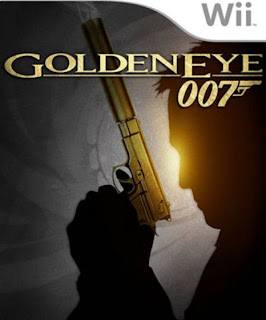
cover art, goldeneye 007 for the wii
and by current evidence, all else has failed.  we're getting to the point where the game industry is, for lack of a better phrase, enhancing their use of these three techniques in game development as much as or more than generating original intellectual property.  sometimes it's pulled of very well, and the publisher gets a big thumbs up from gamers and critics alike.  but at others, the result is a tarnished franchise, unhappy gamers, and pure rage.  2010's been a big year for all of these things, and brings with it a sort of strange shift in the industry.  and why?  my guess is the opportunity to get some revenue for a cost that is lower than new game development by millions.  so it's what we've got to work with right now.

first, re-releases.  i'm actually a fan of this.  if you've been into video games for any extended period of time i'm sure you'd be too.  they bring back stuff i miss, unchanged, in standard definition, without tampering.  it's the purest form of these techniques the industry now employs.  and there's a reason.  what we have these days is a different era of gaming, where consoles have the connectivity and capacity to deliver games from past generations for old school fans to relive and younger fans to see for the first time.  and it servers a purpose.  there are sequels and part 3's and 4's of games that are being released, where their target audience couldn't even grip a controller when the original was released!  let's look at street fighter IV as an example.  the series is a classic, and i played street fighter II on the SNES for the first time in 1992.  for those keeping score, that was 18 years ago, and i was a wee lad of 11.  now yes, i know, some of it is just a marketing ploy that plays on the nostalgia of older gamers (myself included) but it in addition to bringing in new fans it does provide gamers my age something we want.  sometimes i just don't want to have to go digging through the basement to find a PS one or SNES.  it's much easier to be able to download it online and play it through the same next-gen console you already have hooked up.  right now playstation's doing just that, and is re-releasing parasite eve and parasite eve II through digital download on the playstation network.  now granted, the next parasite eve game, the 3rd birthday, is coming out for the PSP soon and this is serving as a lead-in, but it works.  when 3rd birthday was announced my first thought was that i kind of wanted to play the first parasite eve game.  and i will indeed be downloading them when i can.

now a re-make is a little bit different.  it's where you get into a grey area, and try to find balance between quality and how true to the original the remake is.  some have been warmly received by the gaming community, but there have been some that are critically panned and anger-inducing.  as an example of the bad, let's look at metal gear solid: twin snakes, which was a remake of the original metal gear solid.  konami completely retconned play style of the newer games to the remake, completely destroying the feel of the original and removing a lot of the challenge.  it featured added cutscenes and voicework as well.  critics universally lauded the game as wonderful but destroying the original made it a failure in my eyes, and i believe there are more than a few people who would agree with me.  but there is a lot of good in remakes, and nintendo's leading the way.  recently on the wii for example, donkey kong country returns and goldeneye 007. the original DKC was a huge hit on the SNES, and goldeneye dominated shooters and local non-networked multiplayer on the n64 (that 4-way split screen made it extremely fulfilling when playing in golden guns mode, by the way).  neither of these games are identical to the originals back in the 90's, instead they're the original games reimagined.  for example, daniel craig is the model for james bond in goldeneye instead of pierce brosnan, who played him in the film and original n64 game, and most of the other models have been changed.  maps and areas are different as well.  DKC returns is pretty similar to the original too.  except the kremlings are gone and they've been replaced by new antagonists called tikis.  oh, and it's a lot harder.  it's almost like parallel universes (i must be watching too much fringe) where everything is juuuuust slightly off.  both have been graphically restyled with the power of wii's hardware, but still retain the pure fun that both of these games brought in their original releases.  they're impressive in how they keep the same feel as the originals, but give the player something a little different as well.

and then the last realm...

promo art, ninja gaiden 3
the reboot.

yikes.  it's a word loathed by people on the wrong end of helpdesk calls, windows network admins, die hard comic book fans, and of course, video game enthusiasts.  it's something usually uttered in pure rage or fear - as it pretty much represents a last ditch effort to make right something that could go horribly horribly awry.  go ahead, install an exchange server or watch x-men origins: wolverine (not x3: x-men united, thanks rob miller for catching that HOWLING typo) and take note of the disgust you feel.  i mean deadpool with cyclops' optic blasts and wolverine-style swords? it was so offensive i nearly wretched.

rebooting is the scariest one out of all of these - and again becoming more prevalent than actual new intellectual property development.  i touched on this a little bit when i talked about capcom and ninja theory's upcoming devil may cry reboot a little while ago, and made my doubts clear then on how i felt.  now team ninja (not to be confused with the aforementioned ninja theory), is planning the same to follow suit, hinting that their upcoming release of ninja gaiden 3 is going to be released as a reboot of the series.  this is a game franchise that started (for me) back on the NES in 1989, and has never failed to deliver a solid action game through every console and every iteration of ryu hyabusa's adventures.  but my opinion on this reboot is a little different than my fears for devil may cry.  a lot of that is the reasoning and presentation.  the dude on the right still looks like ryu hyabusa.  it's got the same feel as series is famous for.  and the honcho at team ninja, yousuke hayashi, says that they want to bring the franchise back to basics, and trying to start from the beginning without being hindered by the past... yeah those game studio heads definitely have a way with words over in japan.  if you want more on that story along with some other news from team ninja, check out andriasang.  check i'm really hoping for the best here - anyone who's played the reboots of classic games like rygar and golden axe will understand what i mean.

now on this topic, i have to end this with a question to square enix.  when the playstation 3 was released, a demo of the final fantasy VII animated on a ps3 engine was released to showcase the ps3's power.  that being said -

where's my damn final fantasy VII remake for the ps3?

Thursday, November 4, 2010

40. motion gaming - here for good or for short term kicks?

microsoft kinect
video game manufacturers are always looking for new ways to keep gamers interested in their products.  and by that, i mean they're always trying different ways to stay profitable.  it is a business, after all, and i can't really blame them.  using motion or control methods other than a wired brick-in-hand controller spices up the mix, and gives gamers something new and different.  of course it all started waaaaay back in the 80's, with nintendo, with world class track meet on the power pad.  that game was clutch, and something you were jealous of when your friend has the triple super mario / duck hunt / world class track meet cartridge.  there were a couple of games for it, and after that...

nothing.

nothing for years.  well, nothing very memorable.

not until the power pad's descendant the dance mat made an appearance in the US in 1998, coupled with the wildly popular series dance dance revolution series.  that game was lots of fun, for anyone from a skinny cheerleader to lanky white guys to tall lumberjacks to large indians.  at least that was the make up in our particular living room in pittsburgh circa 2002.  coupled with the ps2's eye toy, it seemed that motion gaming was going to be around for a while.

well...  it didn't quite turn out that way.  again, another lull in motion gaming.  not nearly as long as the the time between the power pad and dance dance revolution, but also nothing but rehashes of the DDR franchise, and really not a whole lot with the eye toy.  there still wasn't anything to capture the gaming audience and provide something more than a simple diversion.

nintendo wii
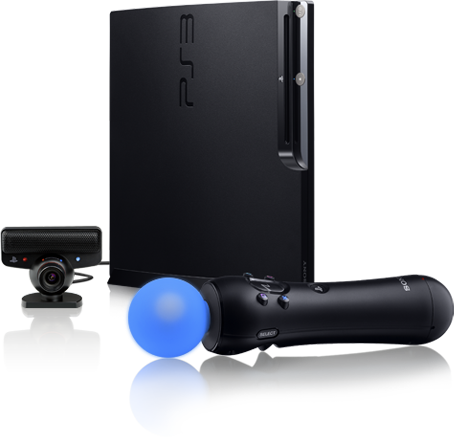
now the next wave.  nintendo's release of the wii back in the 2006 holiday season revived the publics's interest in motion gaming and started the longest lasting active wave of motion gaming production since the 80's.  it was a game changer, quite literally.  by introducing wireless motion control (affordable wireless motion control at that) they forced their rivals to think a little bit differently.  the other two major console manufacturers had to play catch up, because while stores couldn't keep wii's on the shelves, their xbox 360's and ps3's were collecting dust.  to combat this, sony started to work on their move project, which is similar to the wii in the sense that it uses a wireless wand, but adds additional camera support.  microsoft went a different direction with their kinect peripheral, and designed it to be controlled by controller-less body movement and voice, which just came out a few days ago.  it's been four years since the wii, and motion is still kicking.

now i've played games on the wii extensively.  it's pretty damn cool.  i've also played with the move.  also pretty damn cool.  i haven't used the kinect yet, but mainly because i write this thing for free, and can't really justify just tossing money around on gaming peripherals.  so why don't you get off my back about it, eh?  until the peripheral is a full size robot, i'll stick with what i've got to work with.  then i'm down.  but after reading the reviews and watching the videos on the kinect, it looks like we may be at the point where motion gaming isn't just going to be another wave followed by another lull.  this could be the push that makes motion a mainstream mainstay.  so why now?  why are we willing to accept it this time?

sony's playstation move
it's because everyone's following the nintendo model of game production.  think about it - in every generation of game consoles, the nintendo was always a little behind at providing awe-inspiring graphics.  look at the n64 vs the dreamcast.  or the gamecube vs the ps2 and xbox.  and of course, the wii vs the ps3 and xbox 360.  don't be fooled, this was entirely by design.  while microsoft and sony were focusing on pushing high end graphics and realism to attract that all-important male 18-35 demographic, nintendo did what it has since the beginning - put the focus on family entertainment, and of course occasionally throwing out a rated-M gunslinger.  it's following this philosophy that makes this round of motion gaming popular.  the controls are easy enough for anyone to get into, and actual physical involvement makes it fun for people who aren't traditionally into gaming.  example:  god of war III, in all its dominance, graphically sweet, sufficiently violent, with an interesting enough plot is right up my alley.  my parents?  playstation move table tennis.  when the wii was scarcely able to be found on shelves, my mom's sentiment was "you know if you buy a wii i'd like to play it."  and that's the real difference.  this is something that grabs the attention of the casual gamer.  players that are interested in more social arenas, where armor points or attack power don't matter, and there's no real objective.  the only important thing is the fun factor.

but that doesn't mean that's all motion can do.  while it's tremendous for casual gaming right now, given these three formats of motion play, the potential for gamers of a more hardcore variety are huge.  the playstation move, for example, tracks motion with a camera, capturing movement in 3d space.  the kinect integrates voice control.  sounds like a great starting platform for virtual reality.  motion gaming is here to stay, and this is only the beginning.