Friday, June 22, 2012

Death, Taxes, and Diablo III


As I have spent the majority of my 30 years in the Philadelphia area, it’s only appropriate that I start with some words from the greatest Philadelphian in history, Benjamin Franklin.  He did a lot of great things, mainly illustrating his well-versedness in badassery, but it was something he said that was relevant to today’s topic.  While speaking of the Constitution in a letter to Jean-Baptiste Leroy (not of Jenkins lineage), he said: “in this world nothing can be said to be certain, except death and taxes.”  It became a commonly used phrase over the next 200+ years, as the validity of the statement really has withstood the test of time.  And now, in 2012, it can also be applied in our digital age. Surprisingly not even Blizzard’s Diablo universe can escape.

Anyone who plays Diablo III, or actually any player that has played any game in the Diablo series can attest to the first half of ol’ Ben’s epithet.  Death is certain.  That’s become more true with every iteration of the game.  With always-on single player mode, even more so.  In Hardcore mode, even more.  But what they may not realize is that the other half of the saying also holds in the realm of Sanctuary.  Yes that’s right, taxes.

Let me jump back to World of Warcraft for a second before I continue for those of you that aren’t familiar.  In that game, Blizzard had implemented an auction house system to buy and sell items in game between users on the same server.  Someone selling an item could do so by holding an auction or setting an outright buyout price.  This concept spilled over into the world of Diablo III, where the same kind of auction house has been put in place.  The difference is that in WoW all of the transactions (well, legal ones) were strictly based on gold, the in-game currency.  Diablo 3 has a somewhat evolved version of that concept with two auction houses – one for in-game gold transactions, and one for real money.  Yes that’s right, you can buy and sell in-game items with other players for real cash monies – cold hard American greenbacks.   And it’s really changed how the game works.

So this may be a method to cut illegal real money trade for digital goods, but let’s be real, there’s plenty of money to be made in making illegal trade both legal and regulated.  It works as a continuous revenue stream for Blizzard too, since Diablo III’s not subscription based like WoW. Oh yes, they get their cut.
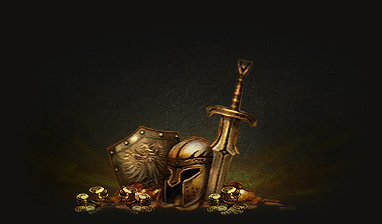
The real money auction house wasn’t available to players until June 12th, but when it did launch it kind of got my gears turning.  The cost structure is pretty basic – the seller sells, the buyer buys, and Blizzard gets up to 15% of the transaction fee for brokering the deal.  So if one was so inclined, they could turn the game into a personal revenue stream to make a little extra money on the side, after Blizzard takes their fee.  Doing it enough and doing it well could in theory fetch a player some good dough, as players with disposable income clamor for shortcuts to legendary loots.  So once you get to that place, where you’re making some profit from the game, you might have to start thinking about taxes.  No, not the 15% Blizzard cut or the 6% most of you paid when you purchased the game.  I’m talking about income tax that you could owe to the IRS off of your Diablo III profits.

Taxes are a tricky thing, especially in the digital age.  What you owe doesn’t just come from a W-2 or a 1099 anymore.  A lot of stuff people buy is online, untaxed, meaning in most places you have to declare those purchases on your tax returns and pay what’s called a “use tax.”  And sometimes people make money off of other things like hobbies and side businesses.  There have been a lot of arguments on the battle.net and Blizzard forums about this exact topic with respect to the real money auction house – so  yes or no, are your real money auction house earnings taxable?

Tushar’s short answer: YES.

Tushar’s long answer: Anecdotally, yes.  I’m not a tax professional and for any concerns you should contact one should you be living real money auction house fabulous.  Then again I don’t think I really need to be a tax pro for this, because as it turns out, I can read English.

You see unfortunately, reading the terms of use and other end-user agreements isn’t something the average user feels it’s necessary to do, even when there’s money concerned.  So first some advice – if you are one of those people, start reading these things.  Second, it’s laid out plain as day in section 10 of the Diablo III Auction House Terms of Use (that all of you have already agreed to if you’re using it):

10. TAXES. You are responsible for taxes incurred when you use the Auction Houses. All auctions are deemed to occur in the United States of America and are subject to all applicable state and federal tax laws and regulations. Proceeds from auction sales may be considered income for tax purposes. You should consult with a tax specialist to determine your tax liability for these transactions.

There you go kids.  “Proceeds from auction sales may be considered income for tax purposes.”  But now here’s the fun part – you’re the one that has to report it, as folks that make money off of services like eBay do.  Blizzard's not your employer in this scenario.  You made money selling your digital wares to another player, and they were just the agent.  I’m pretty sure you’re not going to be getting a W-2 in the mail from them before tax time.  Chances are if you’re not the type of person that reports online purchases for use tax, you’re not going to be reporting this either, and you’ll probably be ok because you don’t make a lot of money from it.  If you are in fact making a few grand on it, kudos to you and your keen understanding of game economics.

But it gets even more interesting.  Let's consider for a second the stock market.  I buy a $100 issue and tomorrow it increases in value to $110.  Technically I made $10, but I never realized the profit.  It's not real cash in my pocket.  So I don't pay tax on that $10 I made until I sell the stock to realize the profit, and it becomes real cash in my pocket.  Blizzard has a digital wallet system that seems to kind of work the same way and in my opinion a parallel could be drawn.  Technically what's in your Blizzard wallet isn't "real" cash, and may be exempt from taxation.  If you're working through PayPal on the other hand, I believe they're now required by the IRS to report your PayPal income as a third party settlement organization. 

Bottom Line?  If you make income - any income, it's reportable to the IRS.  Not always taxable, but reportable.  There's no explicitly listed  minimum value that makes income reportable.  In this particular case, in my opinion, I would say anything below the cost of the game wouldn't be considered income.  So if you made a few bucks on the real money auction house, just report it.  It'll make your head hurt far less, minimize your tax risk, however little it may be, and you still come out in the black.

Just keep your receipts, kids.

Tuesday, June 19, 2012

Cosplay and Reality - A Day at Comic Con vs A Day at the Golf Course


Would you ever guess that there would be anything similar between going to comic con and going out to play a round of golf?  On one hand you have a citywide celebration of geekery, with comic and sci-fi icons signing pictures and a flood of citizens of geekdom overtaking a convention center.  On the other hand, you have an outdoor sport traditionally played in a country club environment - calm, quiet and finishing with a drink and a cigar at the clubhouse. Go ahead, try to come up with some similarities.  I'll wait.

So what did you come up with?  Nothing?  I suppose that's fair.  You may find it easier to build a fire with two sticks and pure rage than to succeed in this ridiculous exercise.  But after witnessing what I did at my last round of 18 at the local golf course, I sat down on my couch and drew one parallel.

And I'll get to it in a second.  First let me address what I know what some of you may be thinking.  Those who know me personally know I'm a pretty massive geek.  Massive of course both in the sense that I am not only a large man, but also can sit through a Marvel movie marathon for over 15 hours and thoroughly enjoy myself, regardless of the risk of potential muscle atrophy or heart attack from the sheer volume of popcorn consumed.  So golf?  Really?  Well kids, it can't be all pure geekery 24/7 (don't panic!).  I mean we all have to have to do other things.  Having a day job for one, even if it exists for the sole purpose of supporting our geeky habits.  Granted mine is one where I'm paid to run computer nerd operations for my company, but still, while it may not be directly obvious to some, a well-rounded geek serves him or herself way more than one who doesn't know anything other than geek culture.  I try to play golf whenever I can.  I handle business like a damn professional.  And I roll a barbarian in Diablo III.  The majority of my world is based in reality.  How else could I go by my tagline of tech boss by day and nerd hero by night?  Ethics, man.  Come on.

But business? Sports? What the hell is this?  I thought you were a nerd hero!  Well deal with it.  In D&D they call it multi-classing.

And as it has been pointed out to me, that reference is why my nerd hero status is never called into question.

So back to comic cons, golf and cosplay.  Cosplayers at a comic con dress up as their favorite characters from nerd culture - be it a game, comic book, tv series or movie.  Strolling the show floor in costumes ranging from shabbily thrown together rags to masterfully crafted costumes that would make you swear that they jumped out of the pages of a comic book or off of a movie screen, it's always fun to see.  Believe it or not, I see the same thing on the golf course.  Folks step up to the first tee in everything from a simple polo and pants to a full on branded PGA tour getup, complete with a Bubba Watson pink driver.

The real surprise to me was which out of these two groups is actually more grounded in reality.  From my experience, contrary to what many may think, it's the comic con cosplayers.  Let's look at an example - I got a picture of a couple at Wizard World Philadelphia dressed like Green Arrow and Black Canary.  Their costumes were pretty good, and in the picture you'll notice the lovely young lady cosplaying Black Canary was posing as though she was hitting us with a canary cry.  But she knew it was just a pose, and that she wasn't about to demolish any of the booths around us or incapacitate any guests.  You see, Black Canary is a comic book character and I'm pretty sure she knew that the costume didn't come with superpowers.

The foursome in front of me last weekend at the golf course were altogether different.  They were playing from the blue tees (see geek translation: "hard mode") and were dressed the part, so it would appear to onlookers that they actually knew what they were doing.  They stood behind the tee staring at their $50-per-box golf ball on the tee for roughly a minute.  Set up their stance for another.  Then they took their backswing, swung it through, and drilled the hell out of the ball... exactly 100 feet straight to the right into the woods.  It's like bringing out your old Nintendo and Super Mario Brothers cartridge, blowing into it with your version of whatever ritual we all had loading the game into the console, starting level 1-1, and running directly into the first pit.

See these guys were in fact cosplaying - instead of dressing like characters from a game or comic, they were dressed up like the pros playing on the PGA Tour, with a stark difference.  Where our Black Canary cosplayer didn't actually think she would knock me out with a canary cry, these guys sincerely thought that they were going to crush it onto the green for an easy birdie, just like they do on TV.  They did the same thing on putts - squatting to read the green for no less than 90 seconds before lining up to try knocking the ball into the cup.  And then miss.  Not by a little either - it wasn't even close sometimes.  And I bet after finishing the 18th hole they kicked back in the clubhouse talking about how awesome they were.

So while the comic con cosplayers were the ones getting odd stares on the train from the suburbs down to the convention center, the ones that have actually lost touch with reality can be found at your local golf course.  Because what's really insane?  Donning a fun costume for a few days of geeky fun?  Or truly believing that buying that set of Razr X Musclebacks is going to let you pitch and chip like Phil Mickelson?

Friday, June 8, 2012

A Short Interlude: Lost Continuity

What's up kids?  Taking a one post break to let you all know about a new side project I'm working on, teaming up with New Age Amazon's Ashly Nagrant on a site called Lost Continuity.  It's the brainchild of the both of us talking comics, sci fi, and pop culture in general, crossing the streams and inadvertently creating mashup universes that may or may not already exist.  Being a firm proponent of the many worlds interpretation of quantum mechanics, I like to see it not only as charging headlong into ridiculousness but really creating parallel realms of ridiculousness.

Yeah, my ego rolls that large.

Look, comics, games and sci-fi do it alllll the time - timelines get twisted, realities shifted, and things invariably find themselves in some sort of level of crisis.  Be it final, be it on infinite earths, or be it just being hungry.  You know you've done it too. I mean me and my grad school roommate once had a conversation on the speed of sriracha's delicious flavor and whether or not it's faster than lightning. That's right.  The speed of delicious flavor versus the laws of nature.  And we were stone sober too.  These things just happen on their own.  Does it make sense?  No.  But does it have to? Not at all.  These are the conversations you have that finish with "man we have to write that down," because seriously who's going to remember all that?  At Lost Continuity that's all we're really doing.  Writing it down for posterity and really for the betterment of the world at large.  Making sure those mashups and crossovers survive. So you're welcome.

So the next time you and your friends start talking about "who would win in a fight between a watcher from Fringe and Gambit at Aperture Labs?" or "what if Tony Stark was arrested for public drunkenness and hired Harvey Birdman as his attorney?" or even "what if the Doctor was brown?" you let us know.  Because in addition to our combined vast ridiculous pop culture knowledge, we'll always take suggestions.  feel free to fire one out to us at tushar@lostcontinuity.com or ashly@lostcontinuity.com and we'll do what we can.  In the meantime, check out Lost Continuity and see what you can expect.

Because it might be something crazy enough for you to enjoy, like a Green Lantern cake.  And for those of you who don't recognize the image, that's Superboy Prime punching reality. I feel like there's some meaning there.

Monday, June 4, 2012

Philly Geekend - Wizard World Philadelphia Comic Con 2012 for a Casual Attendee


This weekend I was able to make it out to the Wizard World Comic Con Philadelphia - a weekend every year when nerds from the area descend upon the city of brotherly love to celebrate comic nerdery in all its forms.  Now before I go on about it let me say three things.  (1) I'm pretty sure no one considers me "press." I'm not sponsored by anyone nor was I going to the convention on behalf of any organization.  It was just me going for fun.  So despite the number awesome guests that were attending the show, I didn't shell out for any VIP sessions, panels or photo-ops.  After admission and the stuff I bought, I wasn't about to spend a few hundred dollars more.  (2) I really should have broken this down into Saturday and Sunday and posted each day, but I didn’t, so I apologize for how long this is going to be.  And finally (3) My day job requires me to, well you know, be there, so I was only able to attend on Saturday and Sunday, not the whole 4-day stretch (which I do regret to some degree).  But even attending for only two days, I got to meet some cool people, have some interesting discussions with artists and exhibitors, spotted a few celebrities, and of course saw some decent cosplayers, as one comes to expect from a comic con, of course.  After waiting about 40 minutes to pick up “advance tickets” I thought would save me said 40 minutes, I was finally wristbanded and on my way in.

I got to have some good conversations with some comic people about art, comics, and the industry in general.  The first one was with Greg Horn, artist extraordinaire responsible for a long list of outstanding covers for a number of publishers including Marvel and DC, most recently for DC's Blackest Night series and Wonder Woman #600.  He's done work for Top Cow and Image as well, and is currently doing some cool stuff for Zenescope (that's him on the right channeling his best Galactus).  I bought a couple of prints that were for sale – a sweet Arkham City rendition of Joker and Harley Quinn and another featuring Wonder Woman as a Star Sapphire from Blackest Night.  Picked up his art books too.  But what made the encounter cool was that he actually talked to me at length on the side of the booth while he was signing stuff for other people (which he did for no charge by the way).  On top of comics in general I was surprised to find that he was very up on his Indian legends, namely the Mahabharata, and told me the story about the publishing and abrupt halt to the comic book that was going to be made from that legend.  It's a shame it was stopped too, because his knowledge and sketches for it were fantastic, even to someone like me who's well versed in Mahabharata legend.  So on top of doing some of my favorite covers in all comic-dom, it was nice to see that he's a super cool guy too.  In fact, you should check out some of his art.

Jeff Kaufman from Big City Comics was the next long conversation I had.  I went to the booth to find out more about Big City's graphic novel Terminal ALICE, and it spun into talking about not only comics, but movies too - mostly the art of the head fake and the twist.  Apparently there were a lot of people that finished Terminal ALICE and didn't "get it," ultimately prompting Kaufman to change his nameplate from "Writer" to "Writer/Douche" as the title on his nametag.  What was interesting about this discussion was him recounting his experience visiting Normandy in France and drawing inspiration for one of his comics - because apparently according to the locals Steven Spielberg did the same thing to get inspiration for Saving Private Ryan.  He then showed it to me, and after looking at it for a while I came to the same conclusion he did, that the Normandy beach scene from X-Men Origins: Wolverine could have been a shot for shot copy and paste.  I'm looking forward to getting through Terminal ALICE to see for myself, because according to Kaufman, he gives the reader everything they need to figure it out, and I don’t intend to lose.

Now when I said before that there were some awesome guests and I spotted some celebrities, I mean that there were some awesome guests.  Stan Lee, one of the godfathers of modern comics was there, indirectly causing me to be immobilized in a crowd of people waiting to stand in line for a picture or autograph.  I did see him but couldn't get close enough to snap a photo, as I didn't shell out the $80 to do so.  A friend of mine got to meet him and have a couple of his comics signed, and said he was a pretty funny guy.  When he asked Stan the Man how he was doing, his response was "Well I'm here, so I THINK I'm doing OK."  To be honest I expected no less after we’ve all seen his usually comical cameo in Marvel movies, not to mention his role in one of the funniest scenes in Mallrats.  This con was kind of a Mecca for Star Trek fans too.  I believe this was the first time that all of the captains from the different Star Trek shows (Shatner, Stewart, Brooks, Mulgrew, Bakula) were together in the same spot at the same time.  I was able to see them all, but wasn’t about to fight the mobs to try and get through.  And on a side note – Patrick Stewart is aging extremely well.  Must be all that time he spent with Q.

Then there was the original Hulk Lou Ferrigno, Thor's Chris Hemsworth, Heroes cheerleader Hayden Panatierre, the original Buffy Kristy Swanson, and a bevy of wrestlers headlined by CM Punk, who commanded the longest lines for anything I’ve ever seen in my life.  And I have to tell you, after seeing a guy like Paul Bearer in character for so many years, seeing him chilling at his booth texting was something that was exceptionally amusing to me.

In contrast to guys like Stan Lee and Greg Horn, there were a lot of artists and publishers that were relatively small scale, and a couple of webcomic artists that I've never heard of before.  I got to talk to the guys from web series Sean and Such, about a guy named Sean (but you probably guessed that) trying to run a pet store with his ridiculous coworkers.  I also spoke with the guys from inkbbot.net, who work with a mission I can get on board with – to make comics as ridiculous as possible.  They run a bunch of webcomics at their site, the one capturing my attention most being Casey the Pillowfighter.  Think 300, but he fights with a pillow.  I picked up a print copy of it and the artist, Louie Chin, was cool enough to sign it next to a sketch of me on the inside cover that he did in about a minute unbeknownst to me.

And let’s not forget 30 Rock’s Dot Com talking presidential run in 2016.  Why not 2012?  Because in his words, President Obama is a “black superhero.”  And let’s be real folks, there’s a good chance I may be running mate.  Dot Com / Brown Town 2016 – has a nice ring to it doesn’t it? And I finally met Katrina Hill, the Action Flick Chick herself at the GeekNation booth.

There were some tremendous cosplayers there as well - some of these folks really went all out to get the look of their favorite comic/movie/tv/game character.  From characters ranging from the Dude to Lollipop Chainsaw's Juliet (who by the way gives Jessica Nigri a run for her money) there were characters there dressed to the nines.  

Then there was the GeekNation launch party Saturday night.  They shut down the Field House to the general public for a nerd-only party celebrating the beta launch for GeekNation.  Complete with drink specials named “Thor’s Hammer” and other superhero-themed libations, this might have been the largest collection of nerds I’ve ever seen inside a bar at one time.  The best part about the whole thing was that while people were being turned away at the door, I was told by the bouncer “You’re good sir, go on in” after seeing the Green Lantern logo emblazoned on my chest and wristband.  Actually that’s a lie.  The best part was having a shot with “Super Bikini Girl,” one of the models from the Superhero Photography booth.   All very strange though – a private party where nerds got the VIP treatment and the sports bros got the boot. I met some fun people in there too, including some folks from SuperHeroStuff.com, who was a big sponsor for the night along with the fine people from Zenescope.

All in all it was a good time for a casual con attendee.  The bulk of all of this was on Saturday, and there weren’t nearly as many people there on Sunday.  Which was true for cosplayers as well. Next year I may actually take part in some of the panels and go for the full four days, because something tells me I’m missing a lot on opening day and day 2.

You can see the rest of my photos and more cosplayers here.  Some Spaceballs in there, The Big Lebowski, and a bunch of comic characters in there.  And if you are any of these people or know who they are, let me know so I can post your name for credit.

Wednesday, May 16, 2012

Diablo III and "Always On" DRM


[Article first published as Diablo III and "Always On" DRM on Blogcritics.]

Over time, publishers have resorted to multiple methods of enforcing digital rights management (DRM) on many forms of media, but it started with games.  Of course this had its humble beginnings in software keys, but some games had some fun with it.  The very old Monty Python’s Flying Circus game for example (yeah, it existed) was DRM equipped way back in 1990, where to begin my quest I had to correctly identify a brick of cheese based on a list provided with the game.  LucasArts had a similar system with the Monkey Island series of games in the 1990’s, having the user match up three sections of the included “dial-a-pirate” and enter the corresponding code  (earlier titles also featured DRM).  But of course soon a bunch of companies dropped the gamification of DRM methods (for lack of a better term) and started going the more straightforward route.  More recently Ubisoft led the charge with their hated “always on” DRM system – meaning that even if you wanted to play one of their single player games, the game still had to check in with Ubisoft servers to make sure your copy was legit.  Internet not working?  Well that sucks for you, Chuckles, because neither is your game.

The reason I bring this up is due to the number of users having always on issues with the still-fresh-out-of-the-oven release of Diablo III – including myself.  Last night I joined a game with a few friends and we started chugging along the first questline for the Skeleton King.  As we were just getting to the final dungeon for that quest, my friends started dropping out of the game one by one, until, while exploring the dungeons, enemies stopped chasing me and I realized something was wrong before I got the boot.  Trying to log in several times after this I was greeted with multiple errors that all pointed to the Diablo servers being down, from authentication issues to being unable to connect to the servers to a message that flat out told me the server was unavailable.  So now what?  With the servers being down, logic would dictate that I could no longer play a group game with my friends.  Sure, makes sense.  But the real issue to me was that I couldn’t even play alone.  Without being able to connect to Blizzard servers, I couldn’t even see my character list.  This happens in Blizzard’s MMO World of Warcraft as well when I can’t connect, but I have no problem with that.  The point of an MMO is that the game is based online.  So what the hell is this MMO feature doing in my single-player game?

 This was never an issue with Diablo II.  My copy was registered to me and if anyone else that wasn’t me tried to get onto battle.net they simply wouldn’t be allowed.  I had the freedom to play the single player campaign which gave me randomly generated maps every time through, let me pause the game if I had to step away from the computer, and most importantly, play it whenever the hell I wanted.  And if I had the desire to play with friends, which I did frequently, we would simply start a LAN game or get on open battle.net and go to town.  Or play my separate battle.net characters.  So why on earth would they change stuff up now?

Last August, Blizzard’s VP of Online Technologies Robert Bridenbecker sat down with MTV to discuss the always on issue and said the following: "Internally I don't think [DRM] ever actually came up when we talked about how we want connections to operate. Things that came up were always around the feature-set, the sanctity of the actual game systems like your characters. You're guaranteeing that there are no hacks, no dupes. All of these things were points of discussion, but the whole copy protection, piracy thing, that's not really entering into why we want to do it. I'm a huge purveyor of online sites and from my standpoint, I don't look at DRM solutions and go, 'Wow, those are awesome.' I look at those and say, 'Wow, those kind of suck.' But if there's a compelling reason for you to have that online connectivity that enhances the gameplay, that doesn't suck. That's awesome."

Diablo III Senior Producer Alex Mayberry also cited World of Warcraft as evidence of this being the direction gaming is going, but as I mentioned I don’t see how comparing a game with single player component to an MMO that has no single player components is valid.  I still think the shortcomings outweigh the benefits.  Sure, I understand that in Diablo II, since the characters were stored on my computer, I could lose my character in a computer crash or alter and create characters and equipment out of game.  But I could still play whenever the hell I wanted.  And Diablo III now has a battletag system for communication and stores characters safe and sound on their servers.  But I still can’t play whenever the hell I want.  Worthless account-wide achievements so players can show off?  Sweet!  But I still can’t play whenever the hell I want.

You sensing a theme yet?

In addition to that glaring shortcoming, what happens to “hardcore” mode characters?  When a disconnect happens or you log off or even if you join someone else’s game, you still take 10 seconds worth of damage from anything you happen to be around.  In regular mode that may not be too big of an issue but if your internet drops in hardcore mode, you could in theory be waving bye bye to that character forever.

Even if, as Mr. Bridenbecker says, that the always connected systems were built around features and not with DRM in mind, I’m sure other publishers who are watching this topic will be taking it the other direction.  They’ll look at Diablo III, which is still going to be wildly successful and sell nothing less than a ridiculous amount of copies, and more importantly how they did it all with an always on DRM methodology.  It’s what makes publishers drool dollar signs and lawyers thankful that they’re on retainer.  It may inspire other publishers to make this the standard, locking out single player modes and ultimately turn gaming into a type of enterprise-grade software as a service that my colleagues and I have to deal with in IT.  This in turn would act as a deterrent to piracy, sure, but could also end up actively working against consumers.  Some people travel a lot.  Some people don't have access to super high speed internet connections.  And with rumored methods of blocking used games in next-gen consoles, I shudder to think what the combination of both would be, as well as the eventual spread to other forms of media like movies and television.  It could set a horrifying anti-consumer precedent.

Bottom line – with the exception of MMOs, players shouldn’t be locked out of single-player content.  Period.  Ever.  It is sad because Diablo III is otherwise a very well put-together game with far more polished mechanics than its predecessors.  But unfortunately, its “always on” methodology strikes me something ill, and it’s still a single player game I can’t play whenever the hell I want.

Thursday, May 10, 2012

Microsoft's New Mobile Phone-Style Xbox Live Contracts no Longer a Rumor

[Article first published as Microsoft's New Mobile Phone-Style Xbox Live Contracts no Longer a Rumor on Blogcritics.]

Over the years, especially in electronics, we’ve all seen changes in how companies charge users.  Fading are the days when a customer would by hard and tangible “things” and what’s showing up to take that's place is the sale of services, either in replacement of or addition to these things we think we own.  Sure you paid for your smartphone, but how much convenience does it add to your life if you’re not paying per month for voice and data?  How many people do you know who don’t buy DVDs or Blu-rays anymore because of streaming services like Netflix and Hulu?  Do you still see high numbers of physical servers and hardware in your IT department’s closets or are they starting to move towards cloud-based SaaS subscriptions?  And after work you’re not taking your Xbox 360 out for a spin to play with your friends until you pony up for a LIVE subscription.  You see kids?  Subscriptions and contracts.  That’s how things roll these days.

In some ways it makes sense.  There are certain situations where there’s a lot of cost savings involved for both the supplier and the consumer with subscriptions for services.  For those in the gaming world I’m sure you’re extremely familiar with this system – Xbox LIVE memberships, subscription payments for World of Warcraft and a couple of other MMO games.  The upside is that there’s no contract that locks you in – so if someone wanted to cancel their World of Warcraft account for example, they could do it tomorrow and not pay a single red cent after their last payment went through.  Cell phones carriers are the other end of the spectrum – selling phones at a huge discount but locking you in for a two year contract, with an early termination fee ranging from $200 to $350 for a cancellation.  So why is this relevant?

There have been rumors floating around that Microsoft was going to adopt a similar model to the cell phone one for Xbox 360 units and LIVE gold subscriptions – selling a subsidized 4GB model then locking the customer in for two years on contract.  And those rumors have been solidified, complete with early termination fees.  Sure the fee isn’t as harsh as mobile carriers, but they are in the same spirit of a mobile contract.  The difference is, there’s pretty much a guarantee that I’ll be using cellular service for 2 years.  Xbox LIVE?  Maybe.

The contract is laid out like this – Microsoft will sell you an Xbox 360 4GB with a Kinect sensor unit for $99.  OK, so far so good.  The $99 price is contingent on the aforementioned two year contract of $14.99 per month.  Sounds reasonable on its face until you do the math.  Let’s have a look see.  Suppose I go out and buy a retail Xbox 360 4GB unit with a Kinect sensor.  That would cost me $299.  Then I buy a retail Xbox LIVE gold membership for two years.  12-month cards are $59.99 each, putting my 2 years of membership at retail cost at about $120.  My final price, after two years, is about $420.  Now let’s look at the subsidized bundle.  I pay $99 for the Xbox 360 unit.  I then pay $14.99 for 24 months.  My final price for my two year contract is $458.76, which is over $30 on top of retail. After crunching these numbers, there’s really no incentive.  And I’m not even counting sales on sites like Amazon and NewEgg, where I’ve seen 12-month gold cards go as low as $40.  I’ve done a little additional math of my own factoring in early termination fees and the users’ total cost for cancelling every month for each of the 24 months.  Simply put, there isn’t any short game play that would benefit the user financially to bring their total cost below the straight retail route.

I understand that this plan is structured for the “gotta have it now but don’t have the scratch” crowd.  It’s the exact same thing with smartphone users who wouldn’t be able to afford buying a smartphone flat out, or extending the number of years on a car loan to make smaller payments.  You’ll have the product now, but you’ll pay more in the long run.  If you watch the sales and scour the interwebs, you can find cheap subscription cards and like-new used or refurbished units and spend less than $400 now, saving yourself more than 50 bucks in the long run.

Plus, two years?  What happens if the Xbox 720 comes out and you’re still in year two of your contract?

Wednesday, May 2, 2012

More Patent Wars - Motorola's Unenforceable Injunction against Microsoft


Every day I peruse the tech news on the interwebs to keep up with what’s going on.  There are usually a few interesting stories on some sort of technology development or new games coming out, but what I’ve found over the last year is that those types of stories have been dwarfed in number by news on the business side of technology.  Now I’m not saying that’s a bad thing – I’m both a nerd and a business guy so that intersection of topics definitely interests me.  But it’s the stories that accompany the ones about tech business dealings that make my head hurt.  And all of those stories are on tech patents and lawsuits.

There’s a certain extent to which a defense of patents and intellectual property is reasonable.  That’s the point of the patent system as it was designed – to defend inventors from someone else taking the idea and running with it for profit, protecting them from being victims of corporate theft and economies of scale.  And that works for the most part when it comes to tangible goods or the processes to manufacture said goods.  But trying to apply that same system to technology, namely software, unfortunately can become nothing short of a series of legal quagmires.  Patents can be awarded to very broad solutions and nebulous ideas that there’s no present method to develop, or that could possibly have multiple methods of execution.  Put those patents in the hands of patent trolls and watch them kick back, send their legal attack dogs, and either kill a dream for kicks or pick up royalties.  And in my personal, non-lawyer opinion, I can see how that could stifle and suppress innovation in startups and small firms, who simply can’t afford a potential patent lawsuit from a larger company with deeper pockets.  Something has to change.

It’s nothing new.  I know, as you all do, that this type of thing has been going on more and more as the mobile space has grown.  But that doesn’t preclude me from reading the news and cringing a little bit when i see some of the fallout.  Today was such a day with such stories that irked my nerdy ire.  Motorola Mobility, the broken-off mobile piece of the once whole Motorola, and who i will be referring to as “MoMo” for the rest of this, won an injunction against Microsoft in Germany.  The injunction is in the form of a sales ban covering Xbox 360 game consoles, the Windows 7 line of operating systems, Internet Explorer and Windows Media Player in Germany.  That means every Xbox 360 and every copy of Windows 7 would have to be taken off the shelves.  The reason? H.264 video.  For those not in the know, H.264 is a video codec that covers many aspects of HD video.  One of its claims to fame comes thanks to Blu-Ray players, which all have to be able to decode H.264 video streams.  Online video content delivery through Flash and sites like YouTube use H.264 to get it done too.

What MoMo sued for wasn’t actually for H.264 itself, but two patents that they hold for the delivery of H.264 video.  Their claim is that Microsoft never properly licensed said technologies, and have convinced a Mannheim Court in Germany of that as well.  But it’s not that simple. A United States court has banned MoMo from enforcing that injunction until they review the matter next week.  And in the meantime, Microsoft has gone ahead and moved their European software distribution center from Germany to the Netherlands to mitigate the action.  You see, earlier on Microsoft previously accused MoMo of abusing its FRAND obligations – providing licensing under fair, reasonable, and non-discriminatory terms to licensors as a standard setting entity.  According to Microsoft, those licensing fees from MoMo would come with a price tag in the neighborhood of $4 billion.  So in addition to the German court and US court, the European Commission could also look into this, as they’re already carrying out a probe on MoMo’s supposed “abuse of a dominant market position.”  This is the first step in what is sure to be a long and hugely drawn out process.

On another level, trying to ban Windows 7?  You're telling me MoMo is 100% Mac and Linux in their enterprise setup?

But that wasn’t all for today.  Another report featured Nokia’s new patent assault against HTC, RIM and Viewsonic for infringement on 45 patents in their portfolio.  They’ve already been successful once in suing Apple into a licensing deal for the iPhone, but details on which 45 patents have yet to be released at the time of my writing this.  Now this one I can sort of understand.  It looks like they’re trying to mitigate some financial hits with some additional revenue streams until the Lumia becomes more widely popular.  So while this one didn’t strike a nerve as badly, it still made me shake my head a little.

It just seems to me that the undeniable amount of effort (not to mention cash money) funneled into patent assaults could be redirected into more product development.  There’s a lot of really basic things the mobile world has yet to figure out, like coming up with technologies for things like more efficient batteries.  Put more effort into putting quality products into the hands of the consumers, not quality money into the hands of your lawyers.  Think about the good of the game.

Tuesday, April 24, 2012

Science and Technology Descend Upon the City of Brotherly Love


Well my friends, spring is here in Philadelphia and that means other things aside from those pesky April showers.  That’s right kids, as it was this time last year, Philly Tech Week is upon us.  Kicking off with startup weekend and the Philly Women in Tech Symposium this past weekend, the city of brotherly love is in full swing with technology events through this Saturday.  Most of these events are free, and give anyone in the area from tech experts and professionals to even the mildly tech inclined a number of cool and educational things to do around the city.

So what is Philly Tech Week?  It’s a celebration of technology and innovation in our fair city, with the goal of making Philadelphia better through technology.  Organized by the fine folks over at Technically Philly, the events span multiple topics related to technology.  Regardless of your interests, you’ll probably be able to find something for you.  Folks with a business lean can check out the entrepreneurial events.  Artists and tinkerers?  There are art galleries and other creative works being shown.  Even if your area of interest is Philadelphia government, there are events for you.  There are “tracks” set up for those topics, including entrepreneurship/investments, media/transparency, design/development, art/creative and access/policy.  You can follow along on one of these tracks, or if you’re like me, check stuff out a la carte when your work schedule allows it.  And don’t forget about the social aspect of these events either – you’re sure to meet some new people at the happy hours spread throughout the week and the signature event on Friday.

But what if instead of chips and code you’re more of a chemistry or bio person?  Well Philly Tech Week isn’t all that April brings in the city.  Running parallel to Philly Tech Week is the Philadelphia Science Festival that packs a whole other roster of events in Philly through April 29th.  Providing opportunities for all Philadelphians to positively engage with and build a community around STEM disciplines, the Science Festival showcases the role they play in our area.  Peppered in with open labs, neighborhood science and science cafés are events at Franklin Institute and a science film festival.  From the science of us to the science of food (not to mention the science of beer) there are also family events for you and your little ones.

This is a great time in the city for not only science and tech people to nerd out on their topics of expertise, but for people in the Philadelphia are that have maybe not had a great deal of exposure to science and tech throughout their life and academic career to get that exposure, learn, an understand why science and tech is not only important to Philadelphia, but the world at large.

Check out Philly Tech Week and the Philadelphia Science Festival’s schedules with the links below to see what events might be up your alley, and make sure to follow @PhillyTechWeek and @PHLScienceFest on Twitter for updates throughout the week.

Philly Tech Week Schedule: http://www.phillytechweek.com/events
Philadelphia Science Festival Schedule: http://www.philasciencefestival.org/calendar

Monday, April 23, 2012

Capcom Producer Admonishes Street Fighter x Tekken Players for Hacking On-Disc DLC


I remember that there once existed a time when gamers had to accomplish a feat to unlock additional content for a game.  This was especially true in fighters, where you had to either win with a certain character or some other set condition to unlock more characters, stages, and sometimes character costumes.  It added another type of fun factor to the game, long before Xbox Live achievements and PSN trophies came along.  It was a very simple formula: player + win = content reward.

In current-gen gaming that formula has been augmented a bit, given the number of games that can be played online and consoles that come with built-in network access for communication and downloads.  Sure there’s still unlockable content that you can get by achieving certain win conditions, but some of that has been separated from the game, giving a worthless achievement for feats of skill and publishing the reward as downloadable content – what gamers affectionately (or not) refer to as DLC.  Instead of getting new content through play time or accomplishments, you download them from the publisher.  And no, it’s usually not free.  On top of the sometimes $60+ you could spend on the game itself and additional fees for online subscriptions, you’ll be forced to spend even more on certain downloadable goodies.

This is nothing new – on consoles it’s been going on since the release of the Xbox 360 and PlayStation 3.  It’s another revenue stream that publishers can squeeze out of us, but we pay anyway (me included) because having certain downloadable vanity items is kind of fun.  But the reason I bring this up now is that a specific game has run into some DLC controversy recently, not over simple vanity items but characters – the Capcom / Namco joint-property crossover Street Fighter x Tekken.  Their plans for the game was that it would start with a limited number of characters, with 12 additional characters being available through DLC – for an additional $20 (at the current rate 1600 Microsoft points on Xbox Live).  But they managed it in a very interesting way.  The 12 DLC characters already physically come on the on the disc for anyone that purchased it.  The DLC is more of an unlock code that allows you to access that data.

So of course many enterprising folks went ahead and made some modifications that allowed them access to those characters without paying the $20 for the DLC unlock.  And I really don’t blame them one bit.  They paid for the disc, the disc has the characters on it, so in my opinion they already paid for the characters.  Of course this gets into a whole other discussion on software ownership and licensing that I’m sure I’ll get into at some point in the near future.

 Now the twist – Tomoaki Ayano, the SFxT producer recently talked about the on-disc DLC issue and expressed his great disappointment at players hacking the game to play the characters in an interview with GameSpot.  “Personally, I was really surprised when I heard the news that the characters had been hacked, basically.   So I was pretty disappointed by that. I was really surprised at how skillful the hackers were, basically. But I was really kind of disappointed that it created this kind of environment where a bunch of players were playing the characters but a bunch were unable to play with them.”

What strikes me as interesting, and to be honest relieved, is that Tekken series producer Katsuhiro Harada doesn’t agree with that philosophy.  “Tekken has never had DLC before and charged for it,” he told Edge during Namco Bandai’s Global Gamer Day event.  “This isn’t really directed at Capcom, I have always said this, but I see the characters and their move sets as chess pieces - they are essential items necessary in the game and we would never sell any of those individually.”  As Capcom’s running the show on this one, he fell in line with Capcom in his official sentiment.  He explained that every player needs to have all the characters on-disc so people who don’t buy the DLC can play against people who did without eating up hard drive space.  But it still looks to me that while he’s supporting Capcom in the decision, he’s simultaneously distancing the Tekken series from this issue.  And I sure don’t blame him with Tekken Tag Tournament 2 just around the corner for North America, which will give access to pretty much every character in Tekken history.

While I can understand Capcom’s logic in adding the DLC content on the source disc, it still seems wrong on some level to charge people to use what they’ve technically already purchased.  Especially when that content is 12 distinct characters including Sakura, Guy, Christie, and Lei Wulong.  Sakura and Lei, more so than others with their franchise history, should never be paid DLC.  With this one I’m definitely with Harada.

And to Ayano, after we hear you simultaneously admonish and praise those who hacked the disc, I pose a fundamental question – how did you not see this coming?

Monday, April 9, 2012

Instagram Saga Part II: Facebook Buys Instagram for $1 Billion, More Users Revert to Grade School Shenanigans


[Article first published as Facebook Buys Instagram for $1 Billion, More Users Re-live Grade School on Blogcritics.]


What a week in social media!  Just last week we took a look at Instagram, who had just recently released an app for the Android platform, waking up the sleeping iPhone fanboys and fangirls in the twitterverse to cry havoc and let slip the dogs of war.  Venom was spit, the flames had somewhat subsided, and we all kind of thought that that was that.  Well kids, we were all wrong.  I mean just as far from correct as humanly possible.

On the heels of the Android release of Instagram, we were treated to another news bomb this morning brought to us by Kara Swisher at All Things D.  You see, not one to be left out when anything happens in the world of social media, Facebook today announced that they would be acquiring Instagram and adding it to their suite of online offerings.  So how much does a mobile photo app that doesn't charge for downloads go for these days?  $1.1 billion.  That's right, I said one billion.  Enough money to last you almost 3 years if you spent $1,000 a day, every day.  Instagram actually went through a round of venture capital funding for $50 million, bringing their valuation to $500 million just last week.  As for other $500 million Facebook added on top?  The only reasoning I can come up with is the pure value Facebook believes the photo sharing service will add to their portfolio, as Instagram doesn't have advertisments, and charges their customers nothing for use.  13 employees, zero revenue, and an astronomical valuation through a CEO-to-CEO deal.

In today's press release, Facebook stated - "We've focused on building the best experience for sharing photos with your friends and family. Now, we’ll be able to work even more closely with the Instagram team to also offer the best experiences for sharing beautiful mobile photos with people based on your interests."  And that makes sense really.  What's more interesting is that Facebook won't be completely integrating it into their existing UI - they'll be actively working on building the Instagram brand and working with their team (yep, all 13 of them) to develop the service and corresponding apps independently.

Talk about an impressive story.  You look at any startup shilling for shekels from venture capitalists and you have to imagine that a common unspoken exit strategy in their business plans has to be "We want to be bought by _____" (Enter Facebook, Twitter, Microsoft, Apple, Google, etc. as applicable). And while I downloaded the app just for test purposes, I really think that there's definitely some value and potential there.  

But what about user reactions?  As mentioned before, the iPhone community exploded at the release of Instagram for Android.  So how do they feel about their coveted little club being exposed further?  The sentiment again seems to primarily expressed through the twitterverse, with users sharing methods for exporting their photos off of  Instagram's services to outright deleting their Facebook accounts rather than dealing with the heartache and watching their frail little lives crumble.  TechCrunch has a good compilation of some of these tweets, which illustrate a portrait of a community that is no doubt dominated by whiny children.

My message to the iPhone blind irate is this:  You spoiled little jackasses.  Are you kidding me?  Does this mean this much to you?  You should be sending the Instagram folks in San Francisco a heartfelt thank you note for giving the free program, free community sites, running servers on their own dime without so much as forcing you to look at a single advertisement or going for monetization.  Heaven forbid that they make some money and try to improve their game.  What a wonderful bunch of never-content ingrates.  In addition to making me question the sanity of the masses even more than usual, reading these tweets makes me hope someone makes an Instagram for grammar, adding a filter to your tweets telling you which version of "know / no" to use.  I won't name the user who posted that she would "know doubt have to delete" her app for her own good.

The TechCrunch article mentions some big names making an exodus from Facebook as well, like Boing Boing's Xeni Jardin.  But she's quitting because she has legitimate concerns with Facebook security and their constant gaffes, not because she feels the country club's being invaded.  Totally fair.  As I always say, I have no issues with people making these decisions with logic and reasoning.  It's the blind rage quits that makes me cringe.

This has been a fortnight of overreaction from the hipster mavens of social media, and you know what?  Their tantrums are almost as entertaining as they are infuriating.

But that's ok.  I still sleep fine.

Saturday, April 7, 2012

Mobile Tech. Fanaticism. Instagram. Reality.


[Article first published as Mobile Tech, Fanaticism, Instagram, Reality. on Blogcritics]

Given all the tech I’ve played with over the years, I’d be comfortable calling myself a Windows/Android guy with some earthy tones of Linux and the occasional smooth draws of Mac.  I like to keep up to date and current on what’s going on in commercial tech platforms for two (and a half) reasons. The first is personal – i’m a tech geek, and being more informed and knowing different platforms makes my purchasing decisions more well informed and in line with what I need. The second is professional – my career is primarily one of being the IT and technology alpha nerd, and I’d call geeking out part of my job description. That last “and a half?”  The more platforms, operating systems and “sides” I know, the more credibility I have talking tech, and the less I have to deal with folks associating my opinions with being a pure fanboy of any given platform.

Because fanboyism and fangirlism irk me.  Ohhh kids it irks me something improper. I like what I like because I’ve tested a lot of things, and through that testing formulated my own opinion based on a wide array of experiences.  I like PCs running Windows 7.  I prefer Android-powered devices.  It’s just how I roll.  That doesn’t mean I hate all things Apple – on the contrary I feel the vast majority of their products are really a solid set of devices.  And they back that up with sales, as well as a fiercely loyal fan base that in my opinion has supported the "Cult of Mac" moniker that it has come to be known as over the last decade, rivaling the following of some organized religions.  But when the iPhone was still pretty much on its own in the touchscreen smartphone game, it was all about “cool.”  With the rise of Android, the sentiment of “cool” was somehow converted into one of elitism.

You see kids, the iPhone isn’t iAlone anymore (see what I did there?).  It has competition now.  What the rise of Android has done is one very major thing sociologically, namely the creation of two completely polarized groups of users:  the "I won't touch anything non-Apple" camp and the "Apple is for the computer illiterate, sheep and hipsters locked in groupthink" faction.  Adding competition naturally drove the poles of these groups to consider each other the enemy, instead of just two kinds of tech that accomplish similar goals.  Hell I’ve never seen anything this heated in consumer tech before, including Intel vs. AMD.  That fierce brand loyalty Apple has built does come off as elitist fanaticism sometimes, but at the same time Android side is no less guilty of elitism.

Don’t get me wrong.  Like I said, I’m not a fanboy, and acknowledge the guilt of both “sides” when it comes to this sort of fanaticism.  My problem is with users.  Multiple people I'm friends with and work with run all Mac at their homes, and brag about how their new iPhones are "10x times better" than Android devices – in every iteration of course –  3, 3gs, 4 4s, because they've bought them all.  The problem is, they've never touched, much less used an Android device.  So how could they possibly know?  "But why is it better?" I ask.  No joke, most answers dance around "because Apple/Steve Jobs would never make a bad product."

Ok, that may support why it's a good product, but not why it's "100 times better." How was that purchase fueled by anything other than blind brand loyalty?  I know people on the other end of the spectrum too, who have purchased top-of-the-line Android smartphones and touted their superiority over iAnything while at the same time having never even held any sort of iPhone in their hands.  I have no respect for these kinds of opinions on either side, because they're not based in any kind of logic or fact.  And while I see this on both platforms, I do get it more from Apple users than Android users.  There is still the minority of users that have actually played with both and have a logical preference one way or the other.  THAT I can get on board with.  I've used both and I prefer Android.  Other colleagues have used both and prefer Apple.  Some are warming up to WIndows phones.  Fair enough.  I can't argue that because they’ve done the research to actually know.

With this so called battle raging on for years, why do I decide to bring this up now?  One word, kids: Instagram.  That’s right, the photo app loved and adored by scores of iPhone users is no longer Apple exclusive, and as of yesterday was free to download for Android users.  Now I never truly realized the wonder of this product – in my eyes it was a photo editing app that allowed a user to put a limited number of effects on a picture, providing one-click sharing to social media.  And after I downloaded it myself, my opinion didn’t really change.  It’s still nothing more than a handful of post-processing options that allows me to share to social media from within the app.  As such my personal reaction, and the reaction of most Android users I know, wasn’t too much more than a collective “Meh” for the day.  I just don’t feel the need to make my pictures look like they came from 1977, like one of the named filters the app can do.  And I’m perfectly capable of instantly sharing pictures from my phone to Twitter, Facebook and Google+ with the touch of a button.  So even having Instagram now, the chances of me regularly using it are fairly slim.

Now for the Apple side.  iPhone Instagram fans flooded Twitter upon release of Instagram for Android to not only express their surprise, but their disdain and outright disgust at the mere thought of sharing their precious app with filthy Android users.  Go ahead and look up the #instagram hashtag.  While some Android users are displaying their pleasure and joy at having this app, and the rest of us really don’t care, tweets from iPhoners are overwhelmingly negative.  Check the compilations of hate tweets put together by Android Community and BuzzFeed.  Responses ranged from do not follow requests to Android users to feelings of “eww” and “gross” and “fail” to suggestions to perform lewd acts upon and/or kill ourselves.   Reading these and actually going through the hashtag search actually made me angry.  Not angry because I’m an Android user, but at the pure venom that poured forth from the iPhone community.  Apparently android users are “ghetto” and my access to Instagram now makes it “the projects.” Really? We pay $300-$400 for our devices with 2 year contracts, so I hardly see how we’re the poorhouse alternative to the Apple country club. After the anger came jealousy – because this is clearly the most important thing these people have to address all day.  Following the jealousy however, was a complete 180 into intense laughter.  Why?  Because all I had to do to ruin the lives of a million elitist jerks was download a free app to my Droid Razr Maxx that I'll probably never use.  So on some level, thanks guys, you made me feel all iPowerful today, and sad for you that this is really all it takes for your world to crumble.  I understand it's not ALL iPhone users, but man does that community come off like a bunch of whiny children.

But still, why the hate people?  It's not that earth shattering of an app.  And I really hate to break it to you folks, but Android didn’t crash your party, we were invited.  Instead of being happy that the number of users and photos being available now increasing my a few million and the ability to follow and be followed by Android using friends, hell even instead of being indifferent, iPhone users are clearly filling the stereotypical role of the hipster, complaining that their exclusive underground club’s gone mainstream.  It's like the sound of a million fixed gear bicycles grinding to a halt.

Deal with it.  This has, if any at all, a marginal effect on your lives.  And technology is for everyone.  My apologies on behalf of the entirety of the Android community that you’re no longer the only ones that can add simple-minded single-touch “retro” post-processing to camera phone pictures in an exclusive community.  On behalf of the OG’s of nerd culture on the other hand, I have demands, not apologies.  Give us back cloud computing that made your iCloud possible.  Touchscreen tech in general.  Video games.  Advanced web tools.  The stuff my guys had to manually code that you do with a finger tap.  Alllll the stuff we nerds had exclusively before they went mainstream to the masses only so you could complain about trivial garbage now.

The bottom line is that everyone wants to be one of the cool kids.  Everyone wants to belong to some exclusive club that they can lord over others, as trivial as it may be, when the real truth is that Android devices and iProducts do the SAME. DAMN. STUFF.  When someone says "I love Apple and Android is for the dirty" or "Android is awesome, Apple is the evil empire," 95% of the time what they're REALLY saying is "I love mobile technology, and haven't the first damn clue what the real differences between the tech and platforms are."

Because to the 5% of those of us that know - those of us who actually care to know about and understand this tech that rules our very lives instead of form over function, it’s mathematically impossible for us to care less.